- IHM - Serices and knowledge transfer in the field of clutural and natural heritage


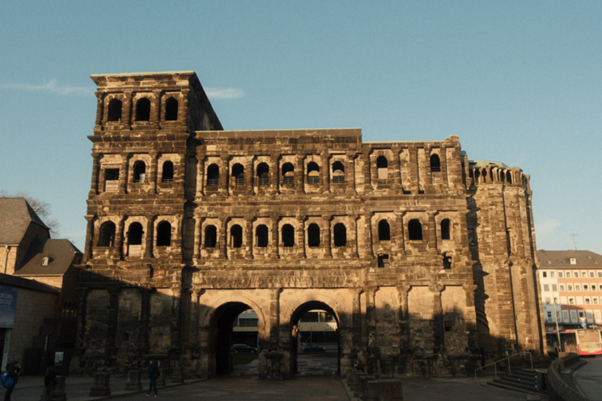
Roman Monuments, Cathedral of St Peter and Church of Our Lady in Trier
Trier | Germany
Project duration: since 2025
On behalf of the Rhineland-Palatinate Directorate-General for Cultural Heritage, the IHM is currently developing a Management Plan for the World Heritage property comprising the Roman Monuments, Cathedral of St. Peter, and the Church of Our Lady in Trier. The site, consisting of nine monuments (the Roman Bridge, the Porta Nigra, the Igel Column, the Barbara Baths, the Imperial Baths, the Amphitheater, the Constantine Basilica, Cathedral of St. Peter, and the Church of Our Lady), was inscribed as a UNESCO World Heritage Site in 1986 under criteria (i), (iii), (iv), and (vi). Trier was a Roman colony from the 1st century and grew by the late Antiquity into one of the largest cities of the Roman Empire and one of the capitals of the Roman Tetrarchy. No city north of the Alps today contains more significant Roman buildings and traces of Roman civilization than Trier. The World Heritage property bears exceptional testimony to Roman civilization and the recognition of Christianity.
In developing the management plan, the IHM applies the latest UNESCO requirements. This includes identifying the site’s value-bearing attributes based on an analysis of the OUV and its criteria, multiple site visits, and expert consultations. Using significance and vulnerability assessments, as well as an analysis of the existing management system and planning tools, the priorities for the next management cycle are then established. Strategic objectives are defined during a phase of intensive participation. The management plan also includes implementation strategies and measures, as well as action plans and a monitoring and quality assurance system. This enables the effective steering and support of the site’s management and ensures the preservation and appropriate development of the Roman Monuments, Cathedral of St Peter and Church of Our Lady in Trier as a UNESCO World Heritage property.